


New UK Age Verification Laws: What Does It Mean For Your Data?

Starting July 25, 2025, age verification will become a legal requirement under the UK’s Online Safety framework for websites that host adult or sensitive content. If you’re in the UK and visiting one of these platforms, you’ll likely be asked to prove that you’re over 18. That may mean uploading a passport, scanning a driver’s license, or completing a facial recognition check.
The aim is to shield children from harmful content, which is a welcome move toward a safer internet. But for adults, it introduces a new and largely unexamined risk, sharing personal data in ways that may extend far beyond the act of verification itself.
You Prove Your Age. What Else Are You Sharing?
Age verification technologies vary. Some providers will request a government-issued ID, others may use biometric scanning such as live facial comparison. While many providers claim to delete images within hours or days, other forms of data may still be retained. Major tech companies have historically struggled with consistent and transparent data handling practices.
This may include your name, date of birth, location, the time you accessed a website, and even a record that you visited a particular platform. Some systems may also store device fingerprints or IP addresses to prevent repeated verifications. That’s more than just age confirmation, it’s the building blocks of a detailed personal profile.
Who Controls the Data?
Verification services are typically operated by private companies. Although they must comply with privacy regulations, their terms of service often allow for the collection, storage, and sometimes sharing of anonymized data. The concern is that “anonymized” doesn’t always mean “untraceable.” Over time, small data points can be linked to paint a very specific picture of user behavior.
Users are rarely in a position to meaningfully control how their data is handled. And once information is uploaded, it’s difficult, if not impossible to know exactly where it goes or how long it stays there.
Data Breaches and Long-Term Risk
Centralized storage of identity data always carries the risk of breach. History has shown that even well-intentioned platforms can fall victim to cyberattacks, leaks, or misuse. When ID documents or biometric data are involved, the consequences are more serious than a leaked password.
The larger concern is not just what gets shared in a breach, but how it could be used to link individuals to browsing activity that was once considered private. In the wrong hands, this type of information opens the door to fraud, manipulation, and long-term reputational harm.
Protecting Your Privacy Within the Rules
None of this means you shouldn’t comply with the law. But it does mean you should take steps to protect your privacy, even after you’ve followed the rules.
Start by using platforms that are transparent about what data they collect and how long they keep it. Choose age verification options that require the least amount of personal information. Be mindful of what you upload and when.
You can also go a step further by securing your internet connection with privacy tools that reduce your online visibility and prevent profiling.
Why BLOKK Exists
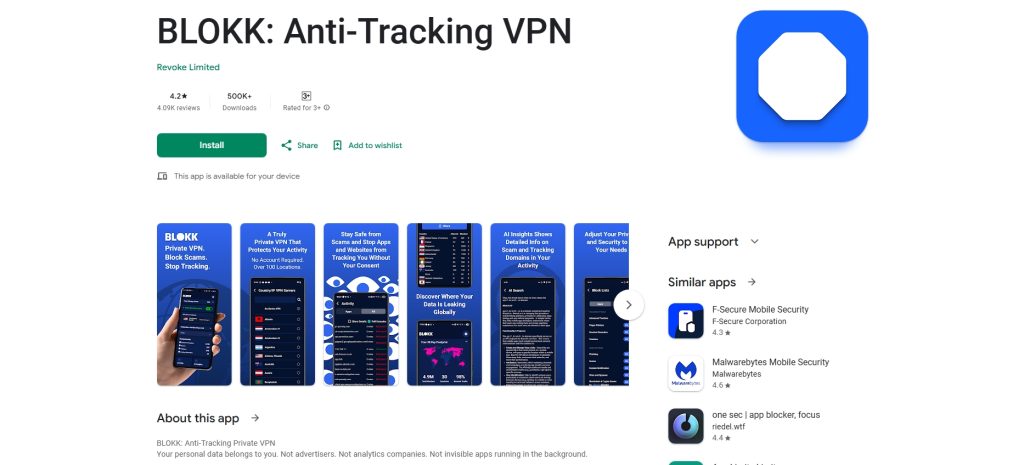
BLOKK was created to give users control in a digital world where privacy is becoming harder to maintain. It doesn’t interfere with legal requirements. Instead, it helps you limit what’s exposed beyond them.
BLOKK ensures your browsing stays encrypted and anonymous. Your traffic isn’t tracked by us. Your activity isn’t tracked by us. And your data remains yours.
That is the whole reason we built BLOKK, to make a privacy app that is actually private, one where your data stays on device and is not tracked by the company that is meant to protect you.
Because proving your age shouldn’t mean handing over your digital identity.
Check out BLOKK’s new VPN feature, and join more than 1 million people who have already chose BLOKK: Install Here


